
Austintown Resident Lookup Coverage
No single public database proves a person is an Austintown Township resident. The most reliable approach joins records by role and date. The Mahoning County Auditor Property Search can connect a name to a current parcel record, but its deeded-owner and tax-payer addresses are record addresses, not a list of everyone at the property. The Recorder supplies the instrument behind a land transfer. Court, voter, vital, probate, license, and library material add separate confirmation points. Start with the record that matches the question rather than trying to turn any one result into a complete profile.
| Record | What it can confirm | Local custodian or route | Access boundary |
|---|---|---|---|
| Auditor parcel roll | Current parcel connection, deeded-owner address, tax-payer contact, sales, and legal description | Mahoning County Auditor | Current processed data; owner or mailing data does not prove occupancy. |
| Recorded land document | Grantor, grantee, and chronology of a recorded transfer | Mahoning County Recorder | Laredo Anywhere states 1980 to present after enrollment; older work uses the counter. |
| Voter record | Public registration and precinct evidence as of a stated date | Mahoning Board of Elections or Ohio DATA files | Sensitive and protected fields are excluded under Ohio law. |
| Court or probate docket | A party's connection to a dated case or estate | County eCourts, Probate, Clerk, or Court #4 | Coverage start is not stated; sealed and confidential material remains closed. |
| Vital-record lead | A birth or death event, or a route toward an estate search | Youngstown Vital Statistics and ODH | Signed application and fee apply to certified copies. |
An exact name is only a starting point. Add a middle initial, a known street, a spouse or relative named in a record, a parcel number, a document number, a case number, or an event year. A record that fits several of those details is more useful than a broad name match. Keep the source date with every note because an address, status, or ownership interest can change.
Note: A negative search result can reflect a different role, date, jurisdiction, spelling, or a confidentiality rule rather than a person’s absence.
Verify an Austintown Resident
For a name tied to a local property, begin with the Auditor’s owner search and preserve the parcel number, property location, legal description, sales facts, and both address fields exactly as shown. The legal description is the land identifier, which is stronger than a street name when a tract has changed or a mailing address lies elsewhere. Then use the owner and acquisition date to locate the related transfer with the Recorder. The online Laredo service has a stated 1980 to present window, so an older document may require one of the Recorder’s public computers at 120 Market Street.
- Search the known name in the Auditor portal and save only a plausible parcel record, including its location, legal description, and sales or acquisition clue.
- Search the current owner as grantee in the Recorder’s recorded-document route, using the date and document details to narrow the match.
- Compare the legal description and parcel information on the instrument. Do not bridge two properties from a surname alone.
- Use a case number, obituary, or dated voter record only as an independent cross-check. A disagreement is a reason to stop and recheck, not to select the convenient result.
- Parcel
- A county land record unit with a number, location, and legal description. It is not a household list.
- Docket
- A court’s running record of events in a case. It helps locate a file but is not a current-address certification.
- Index and image
- An index points to a record through names, dates, or numbers. An image is the document or scanned page itself, if the custodian makes it available.
- Certified copy
- A copy issued by the office that holds the record for a formal purpose. It is different from an online index entry or an informal printout.
Austintown Resident Court Trails
When the known connection is a case rather than land, use Mahoning eCourts General Case Search for the county route and search variants of the party name. The inspected public landing page does not publish its exact input labels, result limits, or coverage-start date. Check the live interface or call the court for procedural help instead of assuming a search field or a date range. Capture the case number, court or division, case date, and docket description before asking for a file.
A dated docket result should be noted by its actual public fields, rather than reconstructed from memory. The live result controls which of these anchors are available:
- Party name and any shown role in the case
- Case number and court or division
- Docket entries and their displayed dates
- Any shown filing, hearing, or disposition information
- Whether a document link is actually available, not merely expected
Mahoning Probate Case Search is the separate channel for probate index and docket information, which can help anchor an estate or marriage-related trail by case number. The screenshot below reflects that official probate portal. Its result does not establish a current residence, and a full file can contain redacted or protected material.
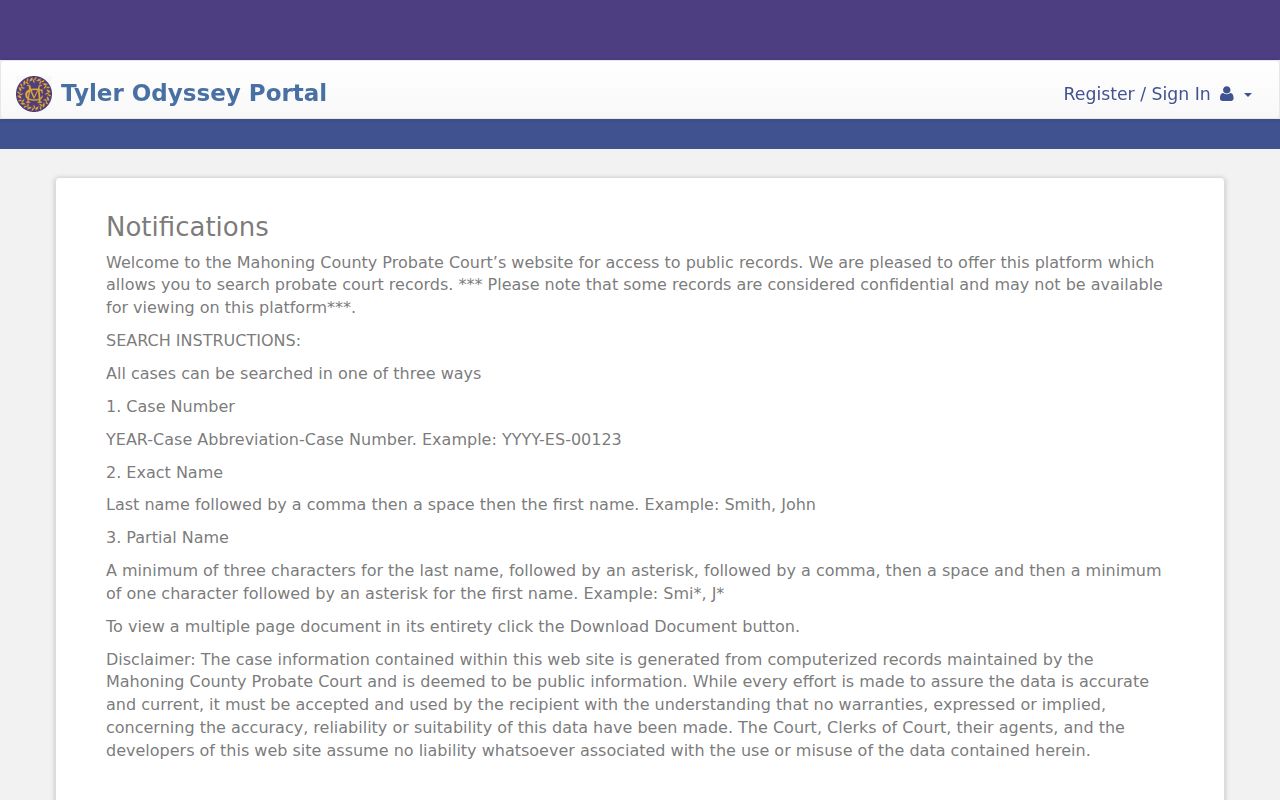
Use the docket as a retrieval key, then confirm copy or inspection procedure with Probate. Court #4 at 6000 Mahoning Avenue handles local misdemeanors, traffic, small claims, civil complaints, initial felony appearances, and probation violations, while Common Pleas and the Clerk hold other county files. For older material or a web dead end, the county Microfilm Department at 345 Oak Hill Avenue is a documented fallback for court journals and docket books.
Austintown Resident Vital Leads
Youngstown Vital Statistics is the local channel for Mahoning County deaths and statewide Ohio birth certificates. At its counter, researchers can use a statewide basic-information index for births from 1908 to the present and deaths from 1964 to the present. That counter index is a lead, not an online name finder. A certified birth or death copy costs $25 locally and requires the signed application and fee required by Ohio Rev. Code § 3705.23.
Counter, mail, online, and phone ordering are distinct choices. The local office says counter certificates are generally issued within 15 minutes, while mail requests need the application, permitted payment, and a self-addressed stamped envelope. Online and phone orders use the named VitalChek channel. The published page does not state a normal postal turnaround, so a mailed request should be planned without assuming a date. Marriage licenses belong with Probate, divorces belong with the court file, and adoption questions follow the Ohio Department of Health adoption-information route at 614-466-2531, not informal name matching.
The county’s early registration history matters. Pre-1908 reporting was uneven, and the library records a 1856 to 1857 volume and later county records beginning in 1864. A missing historic card can reflect incomplete reporting or an unreadable WPA index entry. For an estate question, pair an obituary or death lead with the probate case number rather than treating either item alone as a list of heirs.
Austintown Resident License Checks
State credential records can provide a narrow, dated affiliation check. eLicense Ohio License Look-Up says its information comes from the database of 24 listed agencies, boards, and commissions and is updated daily. Search by last name and first initial with the appropriate board, or use the complete license number. A result may show credential status, license type and number, dates, board action, and a location field where that board publishes one. It does not prove an Austintown Township residence.
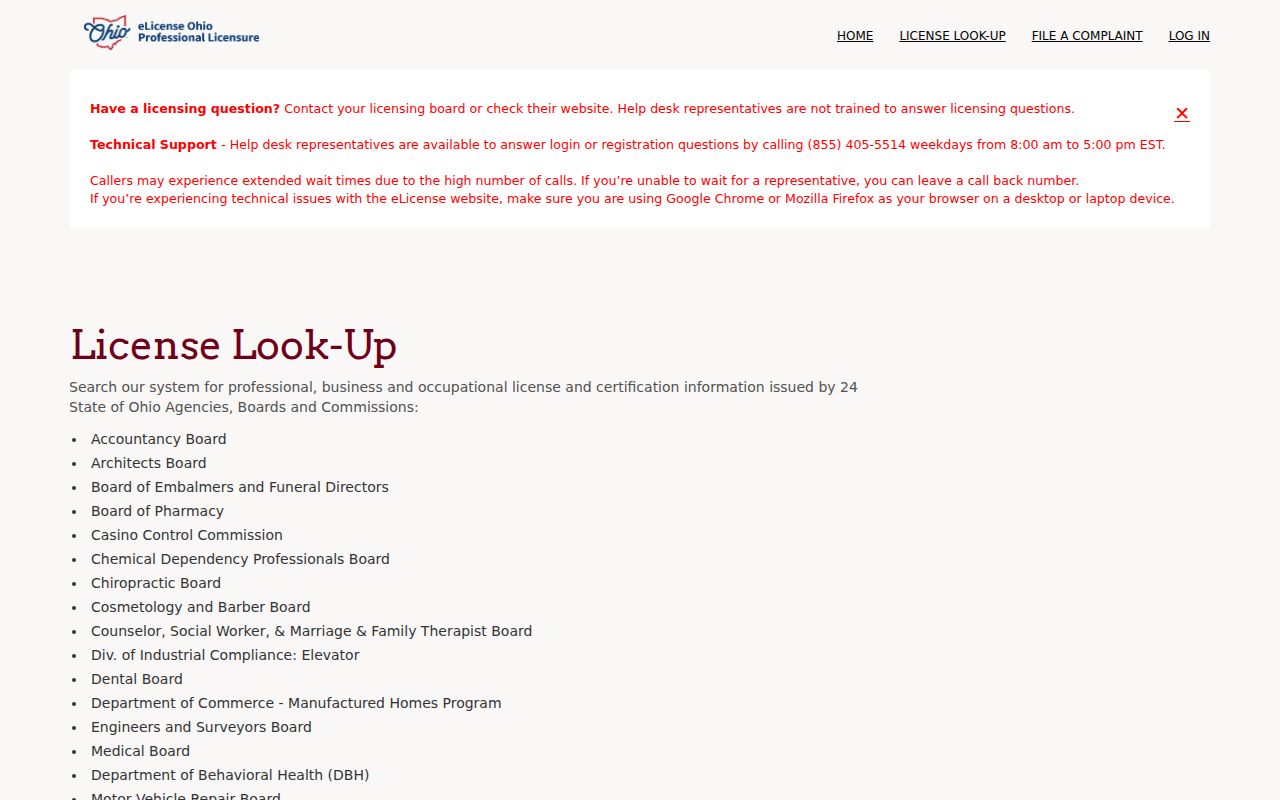
Keep the board, status, credential number, and check date together. An absence is not proof that a person lacks a credential because not every licensing system uses the same portal.
The Ohio DRC Offender Search is likewise a limited status tool, not a general identity shortcut. Its residential ZIP or address information may be a last-recorded address for eligible supervision categories and is not necessarily a current location. The official result should be read only for the status and field limitations it displays.
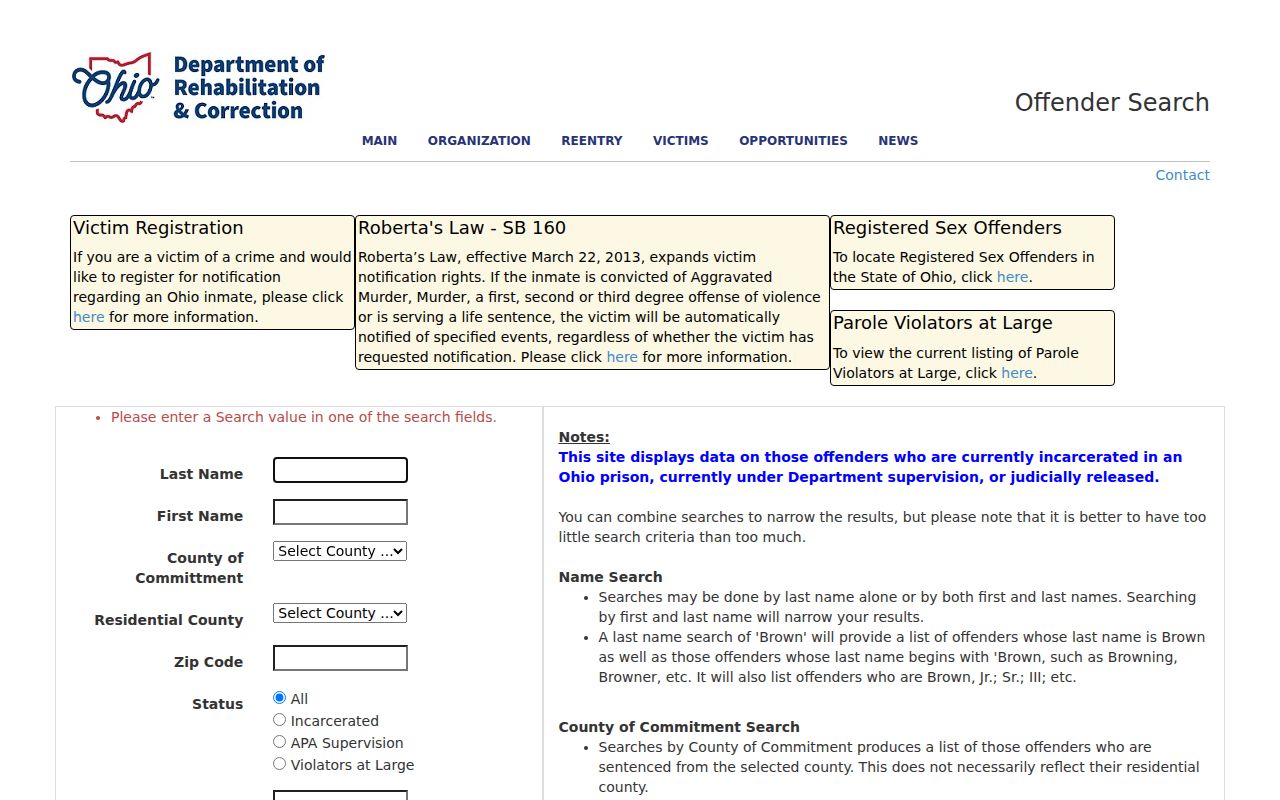
The state search is not a substitute for confirming identity through dated property, court, or vital records. Never treat a name match or an old address field as proof that a person currently lives in the township.
Mahoning County Public Inmate Information is even narrower because it concerns active inmates only. The official roster may change and must not be used to make broad claims about a resident’s identity or current location.
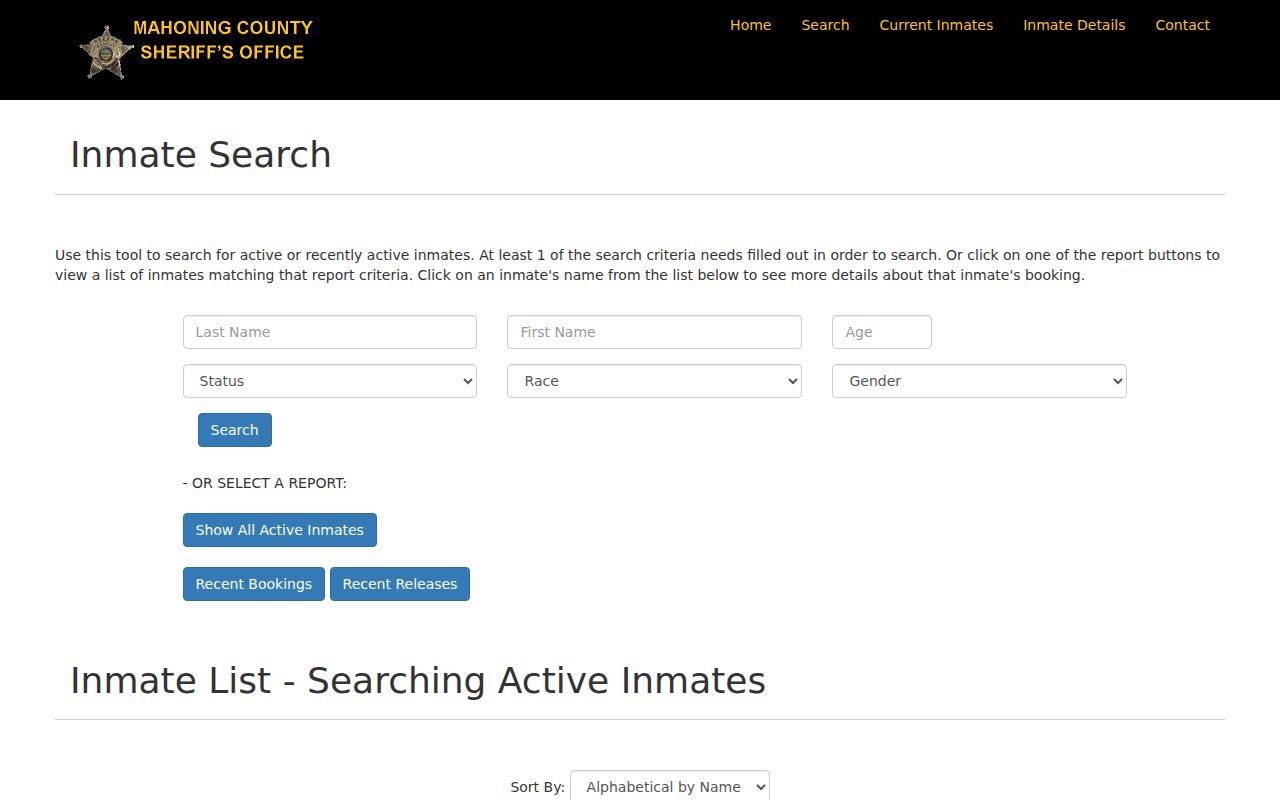
For a procedural custody question, use the county’s current status information and the record’s own date. An active-inmate listing does not describe everyone who has ever had a county case.
Austintown Resident Voter Records
The Mahoning County Board of Elections provides “Am I Registered?” and voter-list paths, but the research did not capture the live individual form’s labels or result fields. Ask the Board for interface help or a public file specification rather than claiming it accepts a particular combination of name, date, or address. Ohio Rev. Code § 3503.13 makes registration forms and the statewide database public records subject to exclusions for Social Security and identification numbers, telephone and email data, confidential voter records, protected addresses, and other material.
Ohio DATA Act voter files are useful when the date matters. The service provides a county registration roll as it appeared on a selected day, retains snapshots for at least 22 months, and can batch large results. A dated file supports a statement about that snapshot, not an enduring address claim. Ohio has no ordinary party-registration field, so primary-ballot activity should not be labeled as party registration.
Note: Safe at Home participants can be deliberately absent from public voter lists, so a nonmatch must never be treated as an error or a location clue.
Austintown's 1846 Records Shift
Historic name research needs the right county label. Austintown was one of the townships taken from Trumbull County when Mahoning County was organized in 1846. A pre-1846 trail can therefore be filed under Trumbull rather than Mahoning. The Mahoning Valley Historical Society holds local materials such as early probate and government records, an 1859 Austintown tax assessment ledger, and historical civic collections. Those are research-center holdings, not a promise of a searchable online resident lookup.
Public Library of Youngstown and Mahoning County genealogy resources add microfilm, yearbooks, newspapers, and local digital research paths. Austintown Fitch yearbooks may be filed under either Austintown or Youngstown. Preserve the school, year, and page, then corroborate a historical name with a directory, census, or another dated record. A historical volume can establish a past connection but cannot be used to infer modern contact information.
Resident Lookup Limits in Austintown
Ohio’s Public Records Act, Ohio Rev. Code § 149.43, provides an inspection and copy-request path for nonexempt public records. A narrow request should identify the office, record type, date range, name variants, address or case number, and preferred format. The office may explain a redaction or say it has no responsive record. It does not require staff to solve an open-ended identity question, and the Recorder states that staff do not perform searches for customers.
Lawful use. Use Austintown Township records for family history, estate research, record verification, civic questions, or scam prevention. Do not try to defeat a confidentiality program or use a record to stalk, harass, intimidate, or harm anyone.
Safe at Home protections in Ohio Rev. Code §§ 111.41 through 111.47 can conceal a participant’s voter and address information. Motor-vehicle personal data and protected vital-record information are not general public lookup material. Correct an apparent record error with the office that maintains it: Auditor for parcel facts, Recorder for documents or index procedures, Board of Elections for registration, Clerk or court for a docket, and Vital Statistics for a certificate. That direct route preserves the distinction between a custodian’s record and a secondary compilation.