
Finding Austintown Township Residents
A useful Austintown Township residents directory search begins with the role a person may have in a record. The Mahoning County Auditor connects a recorded owner or taxpayer to a parcel. The Recorder links named parties to land instruments. The Board of Elections maintains public voter paths subject to statutory exclusions. Court and probate indexes document a person’s connection to a case, while library and historical-society collections preserve older household clues. None of those roles proves every person who lives at a property.
Start with a detail that is hard to confuse, such as a full name, middle initial, parcel number, street address, case number, or year. Keep the source date with each result. A property mailing address can differ from a parcel address, a voter record can be protected, and a directory entry can describe a past resident. That is why this Austintown Township residents directory works best as a record trail rather than a single list.
- Search the Mahoning County Auditor Property Search by owner, parcel, or address and note the parcel number and legal description.
- Use the recorded owner and sale information to check the Mahoning County Recorder for the related land document.
- Use the Mahoning County Board of Elections route or a dated public voter file only within Ohio’s public-record limits.
- Check court, probate, vital, and local-history sources when the question concerns a case, an estate, a death, or a past household.
- When an online route stops, send a narrow request under Ohio Rev. Code § 149.43 or use the Recorder, court, library, or archive counter.
Note: A narrow request identifies the custodian, record type, name or address variants, time range, and preferred copy method instead of asking staff to solve an open-ended identity question.
Austintown Township Records Offices
Austintown Township is not an incorporated city with a standalone city clerk and assessor system. The county offices in Youngstown keep the strongest land and court records, while the township holds local administration, zoning, meeting, cemetery, and police context. The office below should match the record type. The street directory keeps the full address-led parcel workflow in one place.
Mahoning County Recorder
120 Market Street, 1st Floor
Youngstown, OH 44503
330-740-2345
Mahoning County Auditor
County property and tax records
Youngstown, Ohio
Property portal online
Mahoning County Board of Elections
345 Oak Hill Avenue, Entrance A
Youngstown, OH 44502
330-783-2474
Austintown Township Parcel Records
The Auditor’s property search is the most direct current record for an Austintown Township address. Its quick search accepts a parcel, owner, or address. The official instructions also allow partial owner entries and a whole-street search by leaving the house-number boxes blank and entering the street name without its type word. The result is a property inventory, not a household list.
The parcel card separates the Deeded Owner Address, taken from the last recorded owner document, from the Tax Payer Address used for correspondence. Either address can be outside the township. It also displays the location, legal description, sales, valuation, tax material, and map link. Use the legal description and sale details to test whether a Recorder document belongs to the same parcel.
| Auditor field | Input | Useful Austintown Township result |
|---|---|---|
| Quick search | Parcel, owner, or address | Direct path to a parcel record |
| Owner name | Full or partial last name | Candidate current owner records |
| House number and street | Street name without suffix | One address or an entire street when numbers are blank |
| Parcel number | All zeros, punctuation optional | Stable parcel identifier for follow-up work |
| Sales and location filters | Dates, buyer, seller, district, property filters | Property-record narrowing, not occupant evidence |
Note: The Auditor describes its online data as current processed information and does not state a historical online start year.
Austintown Township Deed Records
The Recorder is the next check when a parcel record supplies an owner, sale, or legal-description clue. Laredo Anywhere is the Recorder’s enrolled online service. The office says it can search and print recorded documents from 1980 to the present after enrollment. That stated window is useful for a recent transfer, but it is not a complete online house history.
For older material, the Recorder provides thirteen public search computers at 120 Market Street. Staff do not perform a customer’s open-ended research. A searcher who knows the recording information can request a copy, while someone tracing an earlier document needs the in-office index route. The county Record Searches hub is a practical starting point for related county tools.
See the Recorder’s access screen on the Mahoning County Recorder website.
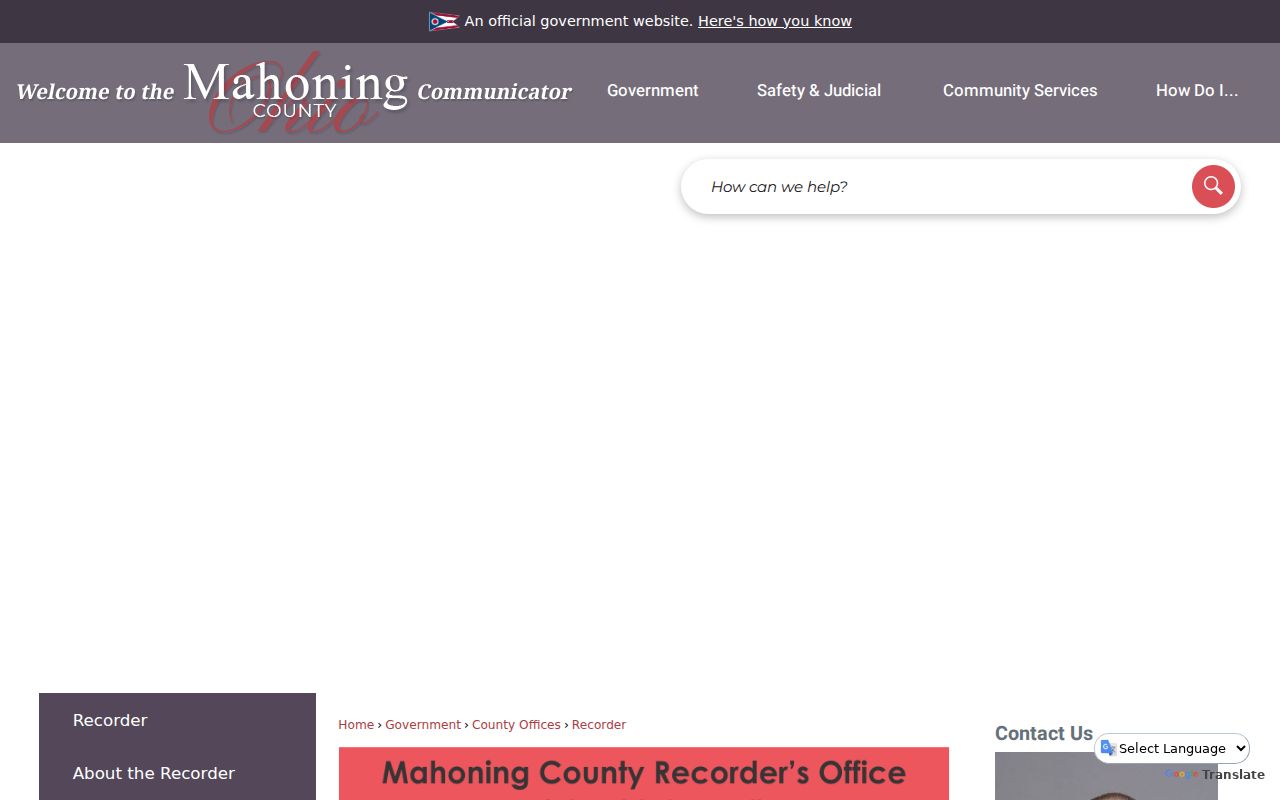
The Recorder route leads to recorded land documents, so the parcel number and legal description remain the best checks against a same-name match.
Austintown Township Voter Records
Voter material is a dated registration clue, not a private directory. The Board of Elections links to “Am I Registered?” and voter lists and files. The public landing page did not expose the individual form’s field labels, so a search should not assume its exact inputs or result display. A requester who needs a file can ask the Board for a public Mahoning County/Austintown Township extract, date, format, and current fee.
The statewide DATA Act voter page instead provides daily county registration snapshots for at least 22 months. It requires an election context, a date range of up to seven days, and a county selection. Ohio Rev. Code § 3503.13 makes voter registration records public subject to exclusions that include SSN, identification numbers, phone numbers, email, protected addresses, and confidential records. A public nonmatch is not evidence that someone is absent.
Use the Mahoning County Board of Elections for local voter paths.
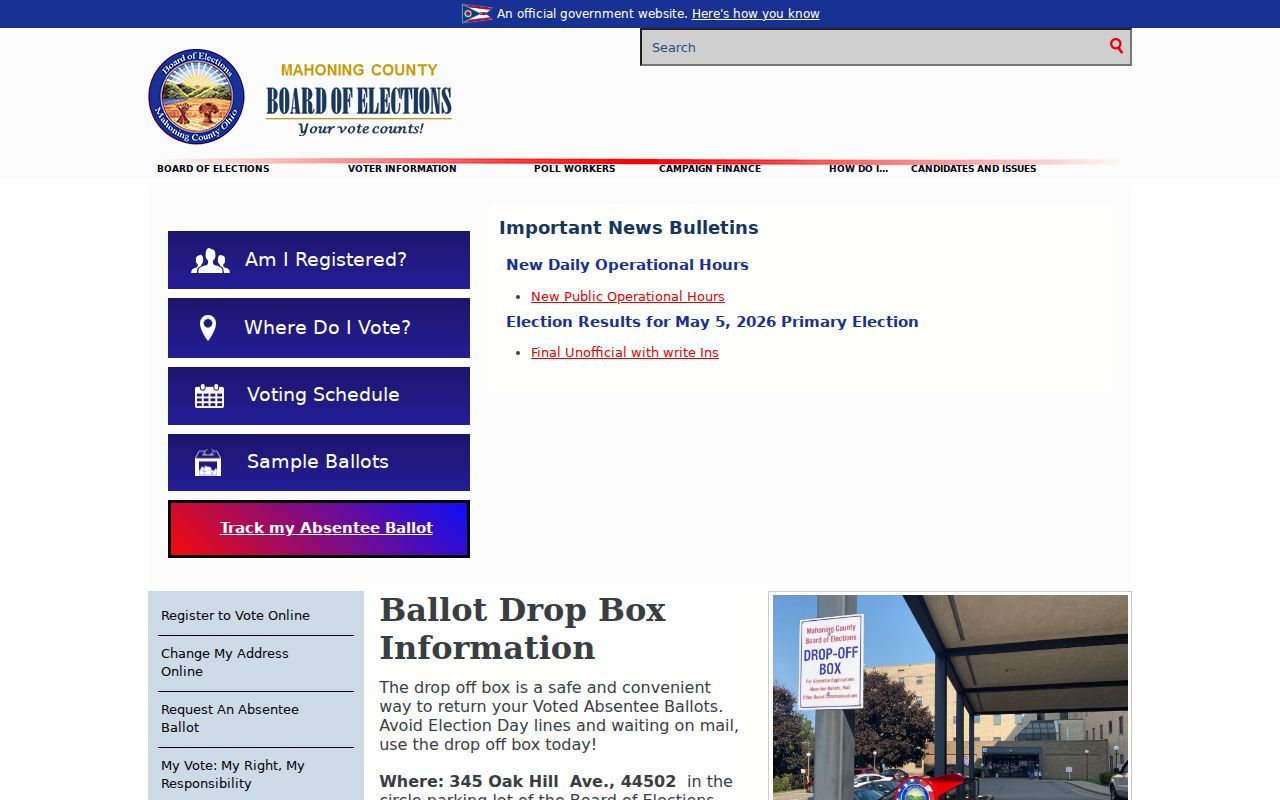
The Board is the local custodian, while a DATA Act download preserves the particular date on which a public statewide file was created.
Austintown Township Court Records
A court index establishes a dated relationship to a filing, not where a person lives. Austintown Township is served by Mahoning County Court #4 at 6000 Mahoning Avenue for misdemeanor, traffic, small-claims, civil, initial felony appearance, and probation matters. County General Case Search is the online starting point for case information, although its public landing page did not state a coverage start date or expose live field labels.
Probate has its own portal for index and docket information, which can help locate an estate case number. The Mahoning County Clerk of Courts keeps Common Pleas and appellate materials. For older court, tax, and auditor material, PLYMC identifies the county Microfilm Department at 345 Oak Hill Avenue, basement floor. Ask for a named case number or a narrow person, date, and case-type range.
Open the Mahoning eCourts General Case Search when a court record is the relevant lead.
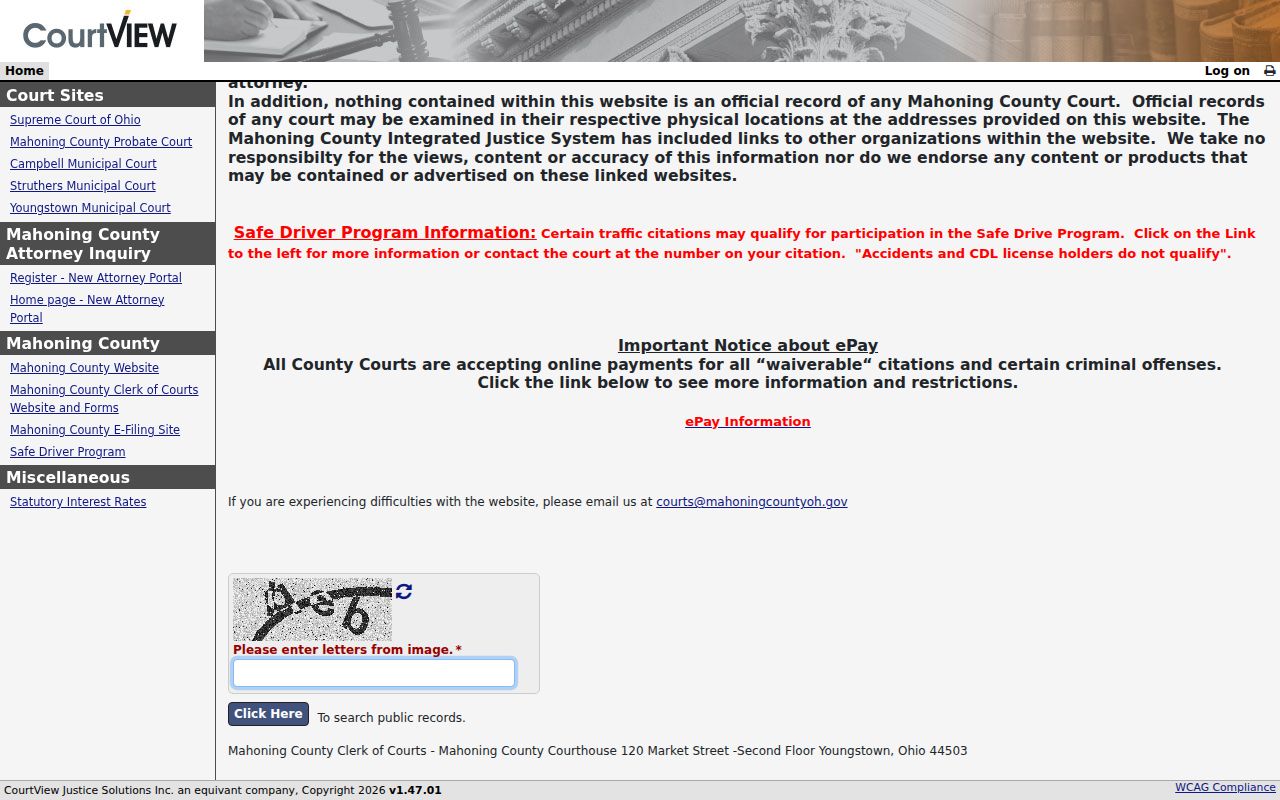
Record the court, case number, and date before asking the Clerk or Court #4 about file access or copies.
Current Austintown Township Directories
Current Austintown Township residents directory sources describe different populations. The property roll is best for a parcel connection. The Recorder shows parties to a recorded instrument. A voter record can support registered-residence evidence when publicly available. Court or license records establish a case or credential context. Each source needs a date and a careful label.
| Record source | What it can show | Keeper | Access boundary |
|---|---|---|---|
| Auditor parcel roll | Current parcel connection, deeded owner, taxpayer address, sales | Mahoning County Auditor | Free current portal; not an occupancy list |
| Recorder index | Recorded grantor, grantee, and instrument chronology | Mahoning County Recorder | Laredo stated 1980-present; counter for older work |
| Public voter route | Published registration and precinct context | Board of Elections / Ohio | Protected and excluded data stay out |
| Court and probate dockets | Party and case context | County courts | Sealed and confidential records remain closed |
| Professional-license record | Credential status and public board data | Ohio eLicense | Does not prove township residence |
When the goal changes from a broad source comparison to confirming one individual across records, the Austintown Township resident lookup follows that narrower process.
Austintown Township Vital Records
The Youngstown City Health District Vital Statistics Division is the local birth and death route for Austintown research. It issues Mahoning County death certificates and Ohio birth certificates. At its counter, it also offers a statewide basic-information index for births from 1908 to the present and deaths from 1964 to the present. That is a counter index, not a public online name search.
The office posts a $25 charge for each birth or death certificate and accepts signed applications through counter, mail, online, or telephone channels. Ohio Rev. Code § 3705.23 governs certified copies but protects the medical-and-health part of a birth record. Early Mahoning reporting was irregular before December 20, 1908, so an old nonmatch may require a Probate, Microfilm, MVHS, or Ohio History Connection follow-up.
Review the Youngstown Vital Statistics Division procedures before ordering a copy.
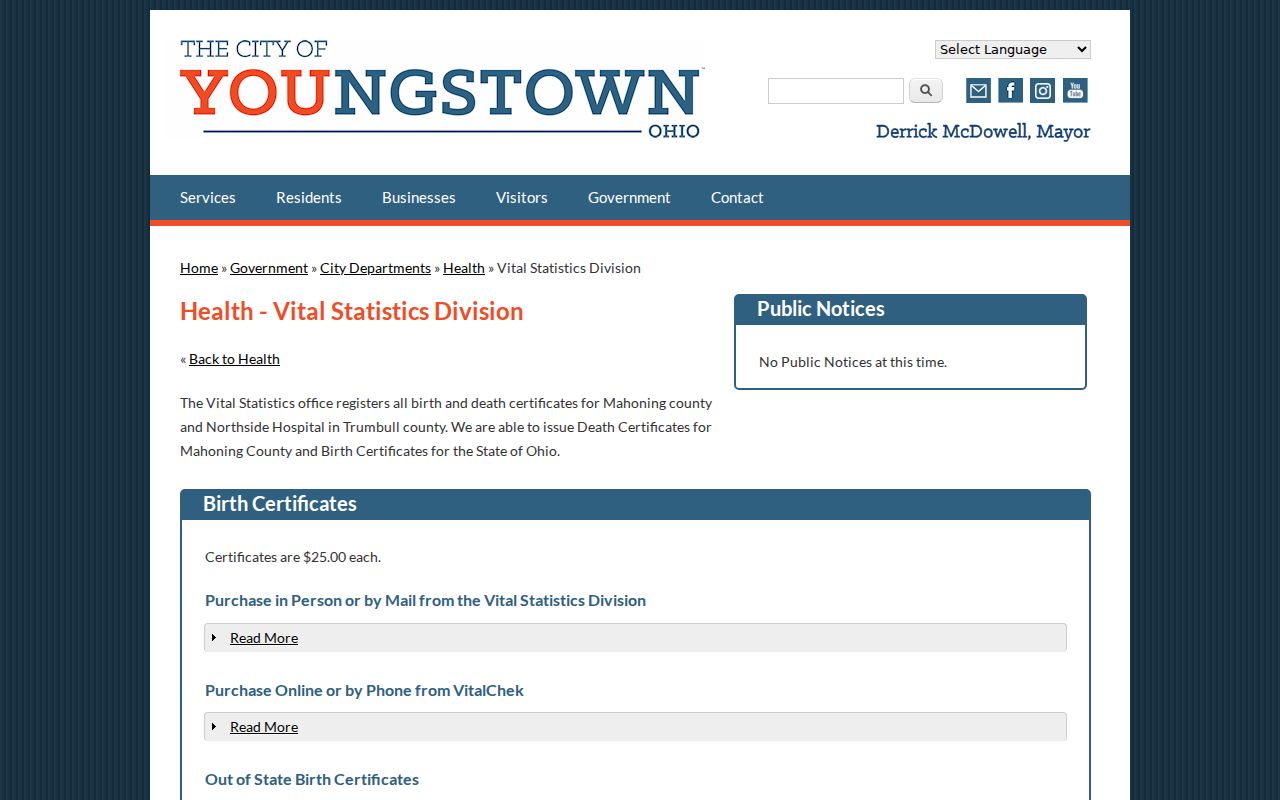
The stated counter and request channels make a vital record a document-led research step, not a shortcut to a current resident list.
Austintown Township Search Terms
Records use similar words for very different things. Reading them precisely reduces false matches and prevents a parcel result from being mistaken for a household roster.
- Parcel
- A county property unit with a number and legal description, used to connect property records.
- Index
- A finding tool that points to a record, often without providing every fact or every underlying image.
- Roll
- A dated list maintained for an official purpose, such as taxation or voter registration.
- Criss-cross directory
- A street-order directory format, where one exists, that can complement a name-order volume.
Keep the publication year, access date, and source type together. A directory entry can place a person at an address in that edition; a deed identifies a party to a transfer; a voter record describes registration within the public portion of the roll.
Austintown Township History Records
Austintown Township’s older trail begins under more than one county label. Mahoning County was organized in 1846, and PLYMC identifies Austintown as an upper-tier township taken from Trumbull County. A pre-1846 search can therefore require Trumbull County research before a record is called missing. That jurisdiction change is an important local records fact, not a generic genealogy warning.
Mahoning Valley Historical Society (MVHS) adds paper records beyond the web portals: local land transactions from 1827 to 1901, township real-property transfers from 1846 to 1851, an Austintown Township tax assessment ledger from 1859, poll books from about 1850 to 1871, and selected early court and probate material. These are research-center holdings, not promises of a digitized name search.
The MVHS government-records collection identifies these older Austintown sources. The Mahoning County Record Searches hub is the matching current source for the image below.
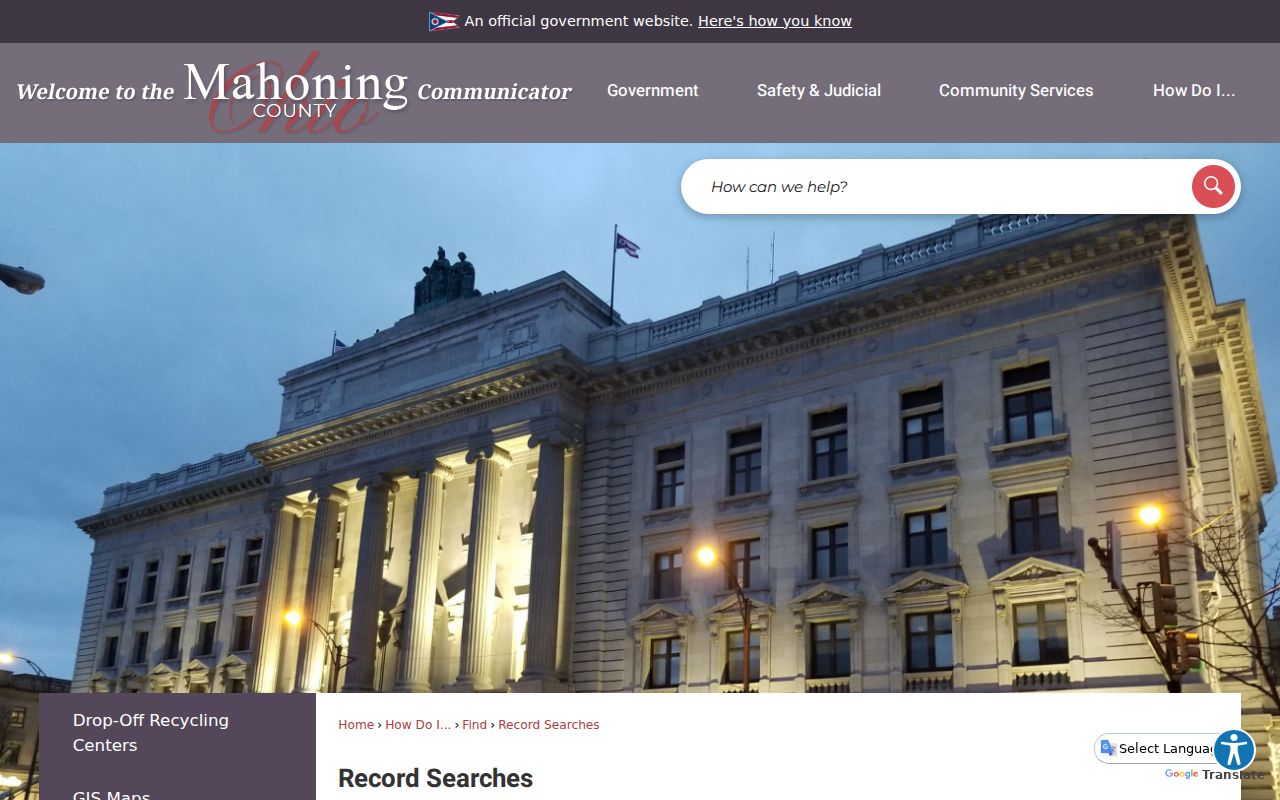
The county hub brings current search channels together, while MVHS and the Microfilm Department provide the documented older-record fallback.
Historic Austintown Township Directories
Historical directories are shelves to inspect, not a single complete Austintown Township residents directory. MVHS lists Youngstown directories for 1869, 1872, 1875/76, and 1877 to the present. Its catalog cautions that most volumes cover the City of Youngstown and only some extend to nearby communities. Check the locality section in the particular edition before treating an absence as proof that a household was not there.
The 1886-87 Polk Youngstown directory is a confirmed exception worth checking because its contents include Austintown and West Austintown sections. PLYMC adds genealogy databases, a Digital Archive, Sanborn resources, and newspaper access. Its guide notes that the Vindicator coverage from 1869 to 2009 contains missing or poorly digitized issues. The Austintown Township city directory details the collection method and entry conventions.
Start with PLYMC genealogy resources for the library’s available databases and collection guidance.

Library and archive material can help place a household in time, but a printed directory should be compared with a released census, obituary, probate file, or property record.
Protecting Austintown Township Residents
Ohio public-record access has protected edges. Safe at Home participants may use a substitute address, and confidential voter records are withheld from the public database and pollbooks. Ohio also protects voter identifiers, motor-vehicle personal information, sealed court material, and the medical portion of birth records. A missing result may be a lawful protection, not an error to work around.
Official records and commercial compilation services serve different purposes. A custodian’s dated record shows the limited role that office maintains and provides a correction route. A commercial compilation can be stale, merge people with the same name, or omit protected records. For a material decision about family history, an estate, civic information, or a possible scam, obtain the underlying record and keep its date.
Lawful use. Use Austintown Township records for personal, lawful research. Do not use an address, voter clue, case detail, or historic entry to stalk, intimidate, harass, or harm anyone.
Ohio’s June 2026 Attorney General warning also advises caution when a caller cites real public case facts while demanding payment. Independently use an official court or agency number rather than a number supplied by the caller.
Record correction follows the same rule. An apparent parcel or tax mistake belongs with the Auditor, a recorded-document question belongs with the Recorder, and a voter, court, or vital concern goes to its named custodian. A library transcription or a search result can flag a conflict, but it cannot amend the official source. That separation protects both the person named in a record and the integrity of the Austintown Township research trail.