
Austintown Township Previous Residents by Era
A backward address trail uses sources with different time limits and different purposes. The Mahoning County Auditor Property Search supplies the current parcel connection, legal description, sales information, and recorded owner or tax-payer addresses. The Recorder then anchors a transfer chain. Historic directory, census, and archive records add household context only after the locality and parcel or address have been checked. None of these sources is a complete resident roster.
| Source | Years it covers | Where held | What it shows |
|---|---|---|---|
| Recorder Laredo Anywhere | 1980 to present stated | Mahoning County Recorder online service | Recorded document chain after enrollment. |
| Recorder public computers | Older-record fallback; earliest range not posted | Recorder, 120 Market Street | Historical index research when online coverage ends. |
| MVHS deed, mortgage, and lease ledgers | About 1856-1863 | Mahoning Valley Historical Society | Historic recorded-document leads, not a complete title abstract. |
| MVHS local land and transfer records | 1827-1901 and 1846-1851 selections | MVHS Research Center | Earlier land and township transfer leads. |
| Federal census and local directories | 1950 is the newest released census; directory scope varies | NARA and local collections | Dated household or locality clues, not annual proof. |
Use the parcel and recorded transfer first when the question is about a particular property. Use a directory or census after verifying the place and period. A title holder may not have lived there, and a person listed at a place may not have owned it. That distinction makes past-resident research more dependable.
Austintown Township Previous Residents Parcel Clues
The Auditor is the starting point because its address search is built for current parcel research. Enter a house number and street name without the suffix. The parcel page can show the property location, parcel number, legal description, sales data, tax history, residential characteristics, deeded owner address, and tax-payer address. Save the parcel number, legal description, and acquisition details before going to the Recorder. They are better checks than a street name alone when a property has changed form or a mailing address differs.
| Parcel number | A county identifier that helps keep research tied to the selected property. |
|---|---|
| Legal description | The lot, subdivision, or land wording used to compare recorded transfers. |
| Deeded owner address | The address sourced from the last recorded owner document, not proof of every occupant. |
| Tax-payer address | The correspondence address, which can differ from both the deeded owner and the property location. |
| Sales or acquisition entry | A date and party clue for finding the matching recorded instrument. |
The Mahoning County GIS viewer can help orient the parcel on a map, but the county calls its mapping informational and not a legal survey. Confirm a land boundary or title point with the recorded document. The map is useful context, not a substitute for the parcel and deed record.
Austintown Township Previous Residents Deed Loop
A deed chain follows ownership through a simple reversal. Find the current owner's acquisition as a grantee, then treat the seller on that instrument as the next earlier owner candidate. Search that seller as a grantee to find the earlier purchase, and repeat. The Mahoning County Recorder identifies Laredo Anywhere as a free enrolled service for recorded documents from 1980 to the present. Compare the legal description, subdivision lot, and parcel changes at every turn. Do not follow a surname alone through a split parcel.
Ohio Attorney General deed-copy guidance directs property owners toward their county recorder rather than misleading copy offers.

For a past-resident question, the recorded transfer supplies dated party and legal-description evidence, while the directory and census layers answer the separate household question.
- Open the current Auditor parcel record and capture the parcel number, legal description, owner fields, and sale or acquisition clues.
- Search the apparent current owner as grantee in Laredo, using the acquisition timing and document details to find the transfer.
- Record the grantor, grantee, recording date, document number or book and page, and legal description from the matching instrument.
- Search that grantor as grantee for the prior acquisition, then compare the property description before linking another transfer.
- When the online window ends, continue at the Recorder counter or public computers, then use MVHS and Microfilm for the older slice.
- Grantor
- The party transferring an interest in a recorded instrument, often the seller in a conveyance.
- Grantee
- The party receiving that interest. Searching a former grantor as a grantee can reveal the earlier acquisition.
- Chain of title
- The sequence of recorded transfers used to trace an interest in the same property backward.
- Legal description
- The recorded land description used to distinguish the property when street names, lots, or parcel boundaries change.
Austintown Township Previous Residents After 1980
The online edge is clear: the Recorder's stated Laredo Anywhere search and print range begins in 1980 after enrollment. That can be an efficient route for a recent transfer, but it is not a complete house history. The Recorder maintains thirteen public search computers for other research, and its staff do not perform a search for a customer. Bring the legal description, known recording information, and a defined date span to the counter instead of asking for an open-ended list of former occupants.
For a narrow request, Ohio's Public Records Act allows inspection during regular business hours and a request for copies. State the office, record type, address or parcel, time range, name variants, and preferred format. The office may explain a redaction and charge actual copy, postage, or supply costs. The statute is a route to identifiable records, not a way to ask staff to reconstruct an entire house history.
Note: The thirteen public computers are the documented bridge when a needed transfer is outside the stated online range.
Austintown Township Previous Residents Before 1846
Before Mahoning County was organized in 1846, Austintown belonged to Trumbull County. That jurisdiction change is a crucial location-specific check for previous residents, land, tax, or census research. A pre-1846 record can be correctly filed under Trumbull even when the same place is now described as Austintown Township in Mahoning County. Preserve the historic county label in the research log and search the earlier jurisdiction before treating a record as lost.
MVHS gives the older trail real depth: local land transactions from 1827 to 1901, a township-arranged transfer-of-real-property ledger from 1846 to 1851, and the 1859 Austintown Township tax assessment ledger. These sources require collection-specific checking and do not establish that every early deed or resident record is digitized.
Pairing Austintown Township Directories and Census
Ownership is only one part of who lived here before. Once the address or locality is independently supported, compare a historical directory line with the nearest released federal census. A directory can capture a resident, boarder, occupation, or business connection, while the census is a household snapshot taken for a different purpose. Neither should be turned into an annual or complete occupant list. As of the research date, 1950 is the newest released federal population census.
The verified 1886-87 Polk Youngstown directory includes Austintown and West Austintown sections. Other Youngstown editions may be city-only, so check each one before relying on a name or an absence. The collections, entry conventions, and scope warning are detailed on the Austintown Township city directory page.
A useful household flow is: verified parcel or locality, then a directory edition with documented township scope, then the nearest released census, followed by newspaper, cemetery, or probate evidence if the dates align. Preserve conflicting spellings, addresses, and dates instead of forcing them into one person.
Austintown Township Previous Residents Death Trails
A transfer caused by death or estate administration often sends the research in two directions. Check the Mahoning County Probate Court index or counter for a defined estate case, then compare its date and parties with the property chain. MVHS holds probate estate packets from 1846 to 1900 for historical work. An obituary, cemetery finding, or probate file may explain a change in title, but it does not prove that every named relative lived at the address.
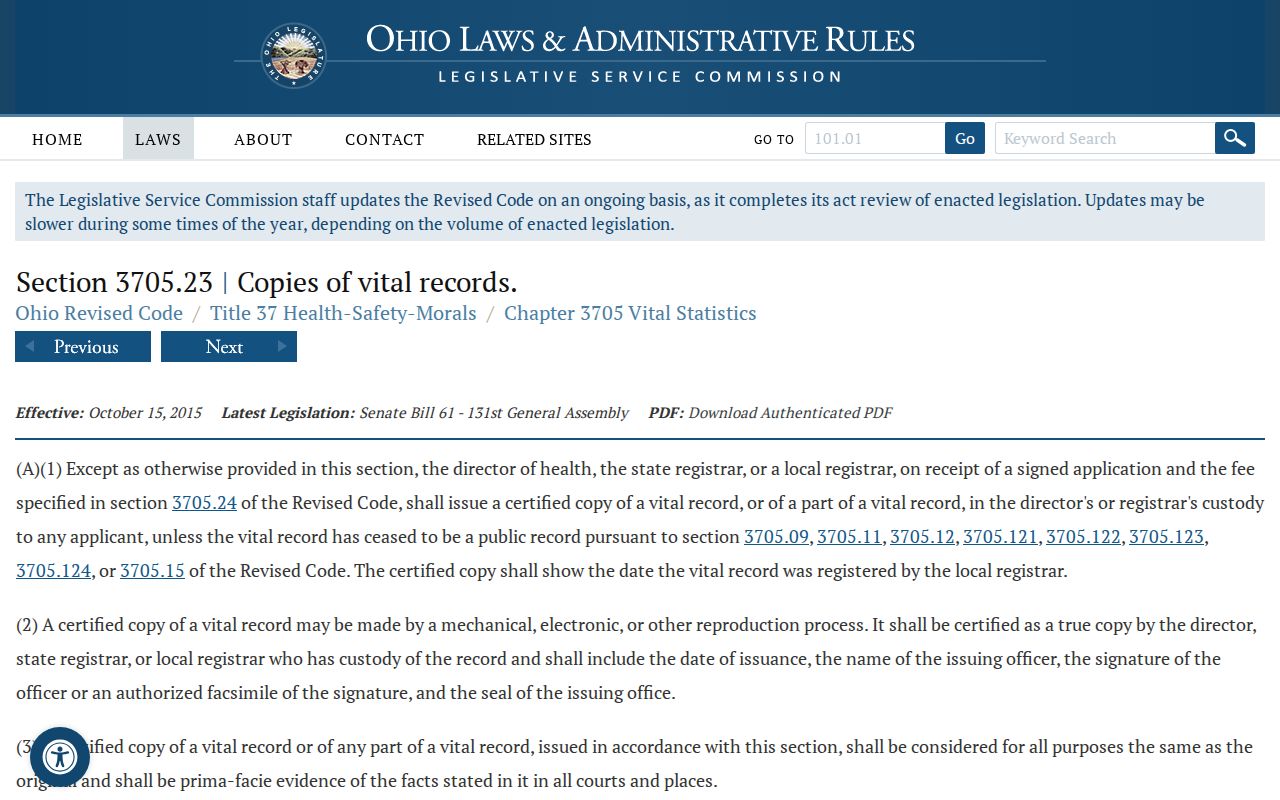
Ohio's vital-record copy statute describes the signed application and fee route for certified vital-record copies, subject to statutory nonpublic limits. The Youngstown local path covers Mahoning birth and death material with stated exceptions, but county reporting was irregular before December 20, 1908. A missing early record or WPA index card is therefore not a reliable negative result.
The Ohio vital-record copy rule explains the formal request boundary for dated death evidence.
A death record can support a dated family-history trail, but it should be matched with the parcel, probate, directory, or census record that addresses the property question.
Austintown Township Previous Residents Limits
Some expected sources remain unverified for this township. Research did not establish an Austintown Sanborn fire-insurance map, a local street-renumbering event, or a public permit field list that reliably identifies residents. The county links Building Inspection and a permit path, but the recorded online search fields and coverage period were not captured. Ask the department for a parcel- or address-specific record or use the public-record request route rather than filling a gap with an assumption.
Property records show recorded ownership and tax contacts, not every person at a property. Directory and census information is dated, coverage-limited, and sometimes locality-specific. Keep the source and date next to every conclusion, and return to the custodian when a document needs verification.